

When buyers ask about your brand, does AI get the facts right?
Read the answers people actually get when they ask about you — and see which pages those answers were built from.
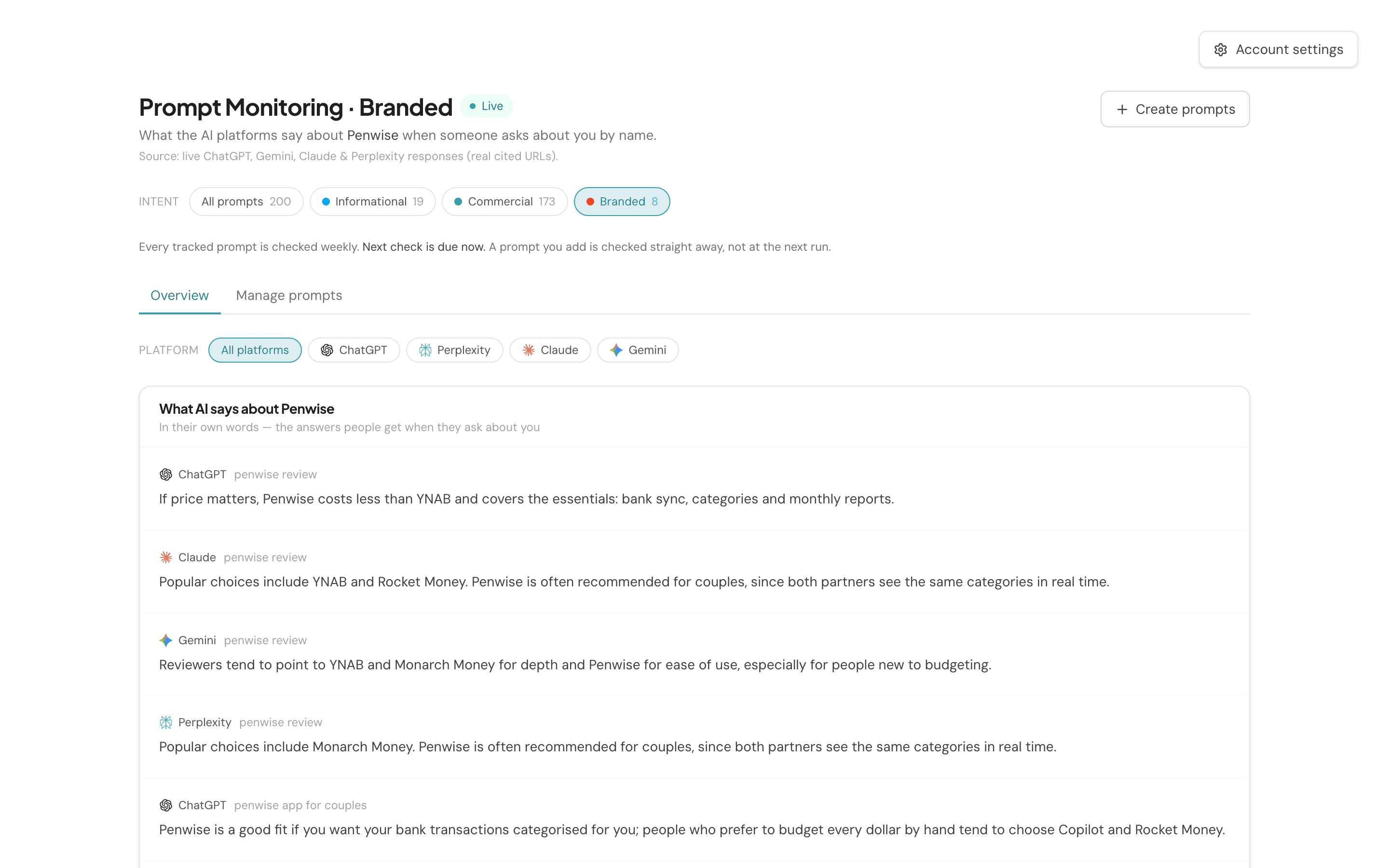
Prompt Monitoring on the branded prompts · our demo account
Does AI describe your brand accurately? Type a domain and we'll run the same check against it. No account, no card.
Here, presence isn't the question. Accuracy is.
When someone asks about you by name, the LLM is already talking about you — so counting whether you appear tells you nothing. What matters is what it said, whether that is still true, and which pages it read to decide.
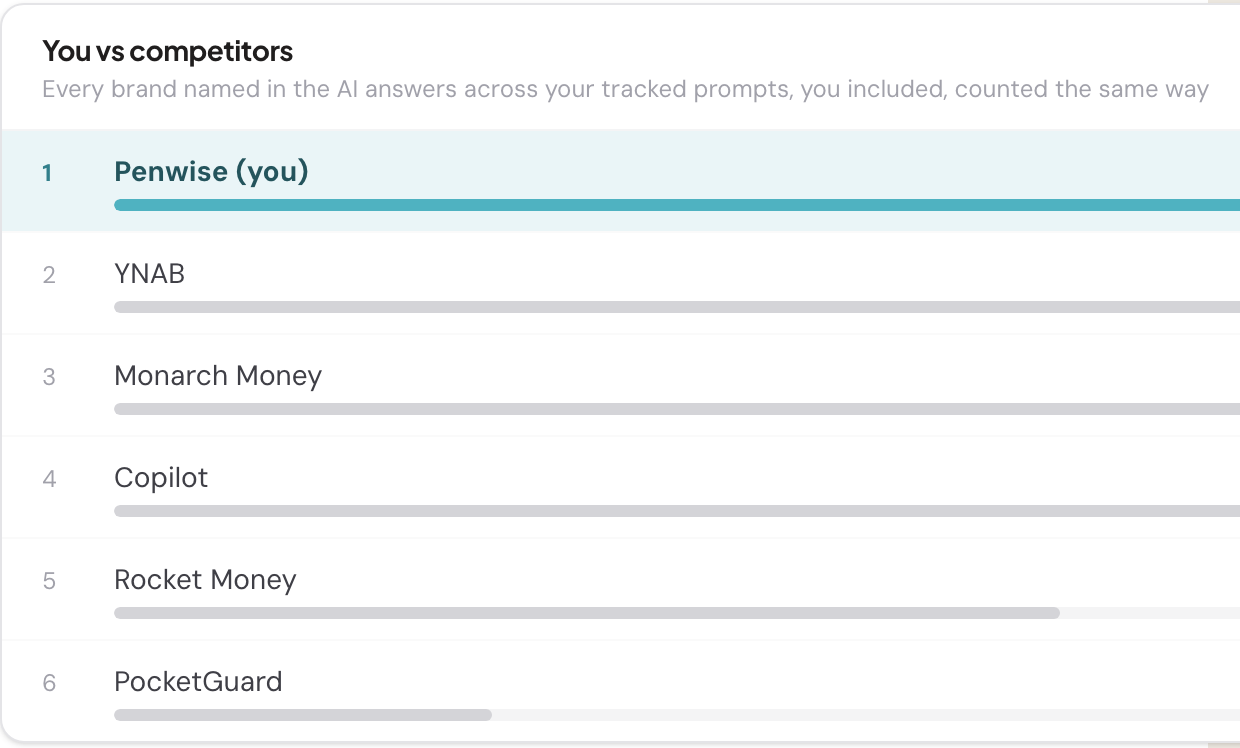
Who else comes up
When people ask about you by name, every other brand the answers bring up, counted the same way as you.
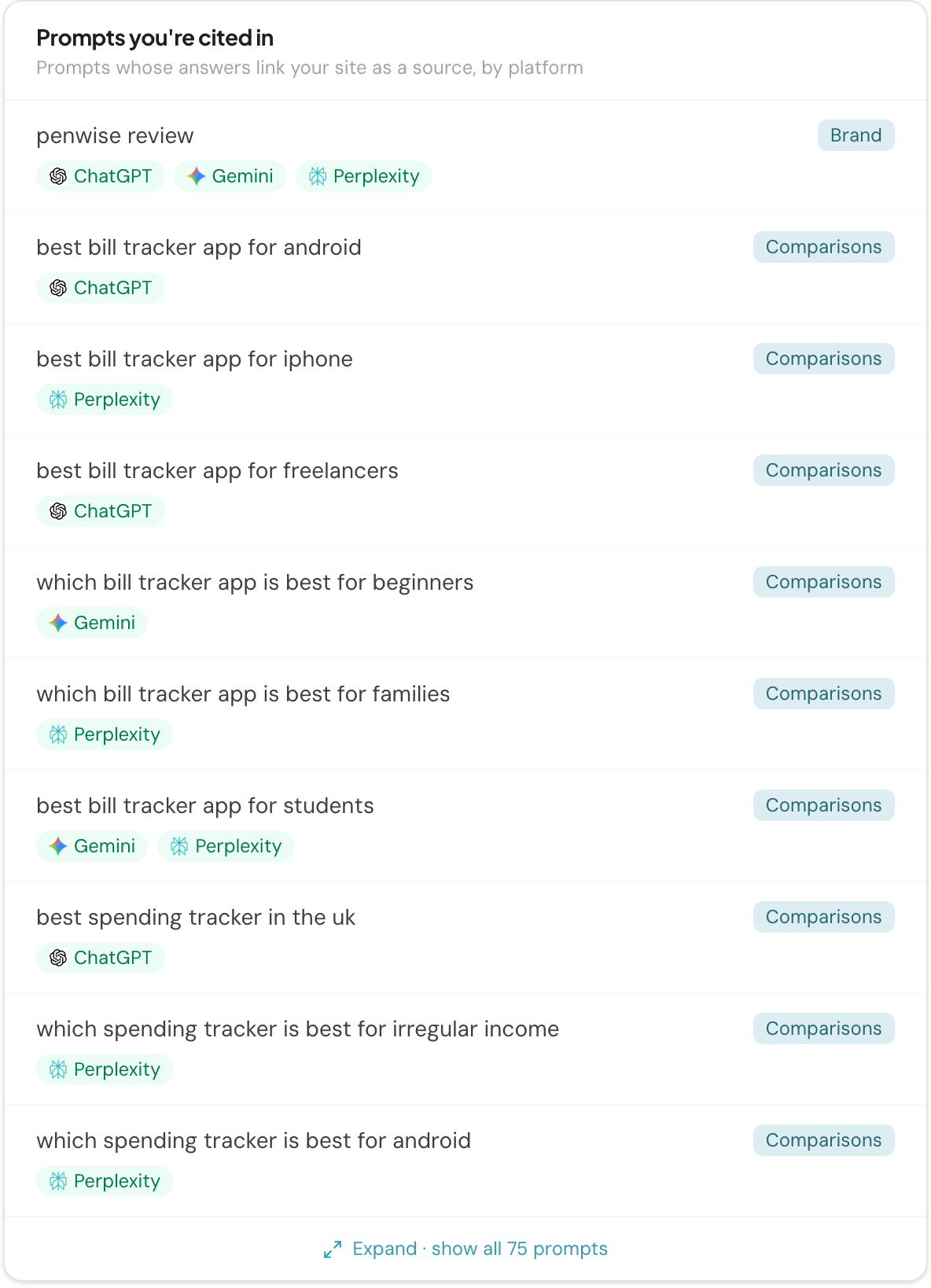
Where your own pages are the source
The prompts whose answers link to your site. The more of the description comes from your pages, the more of it you control.
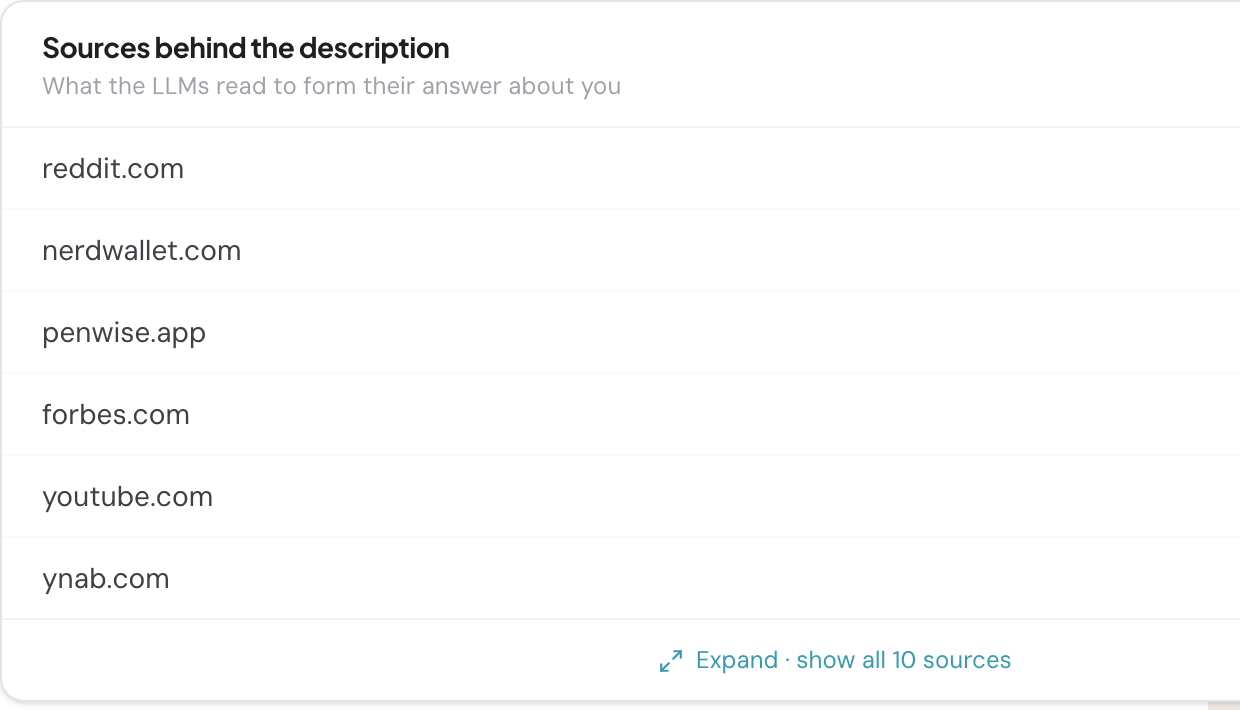
Sources behind the description
What the LLMs read to form their answer about you. Fix the description by fixing what it was built from.
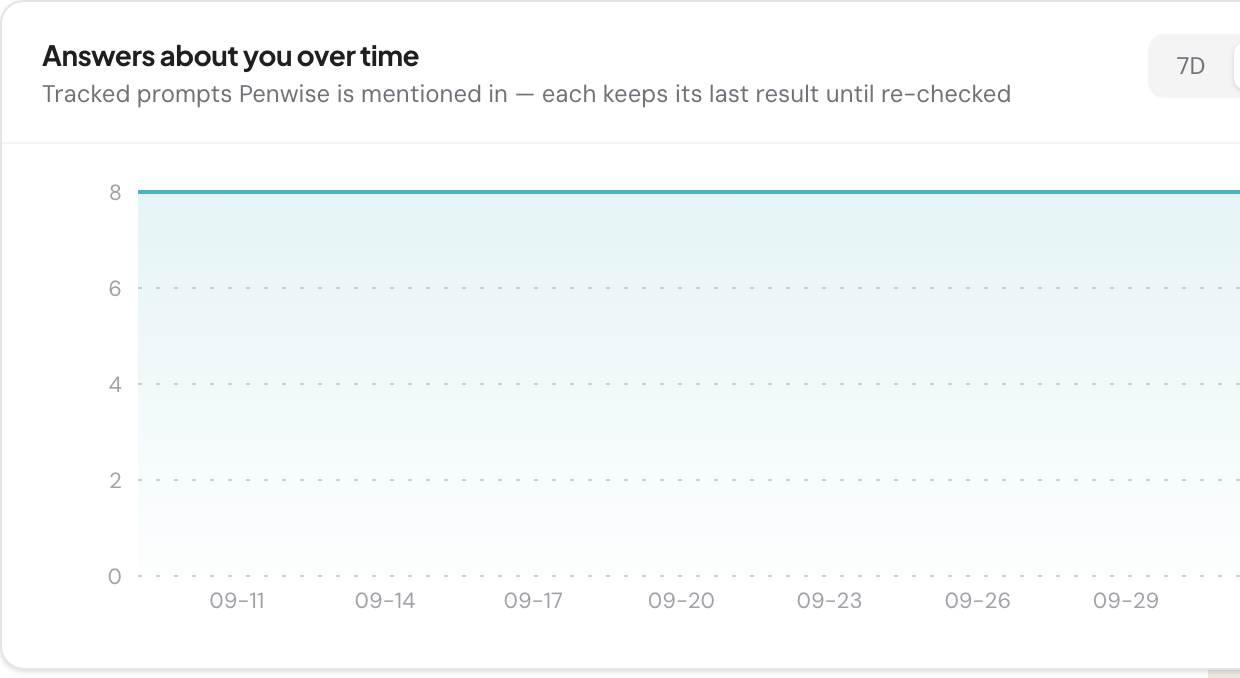
Answers about you over time
Branded prompts sit near the top by definition, so this is a stability check — it matters when it drops, not when it's flat.
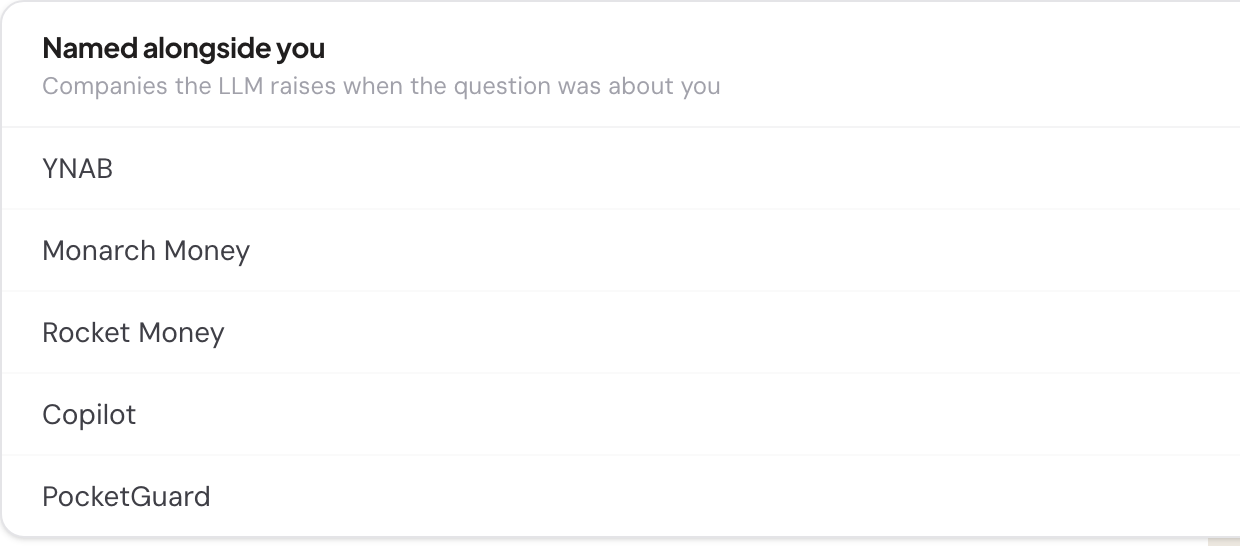
Named alongside you
Companies the LLM raises when the question was only about you. That's a comparison being made on your behalf.
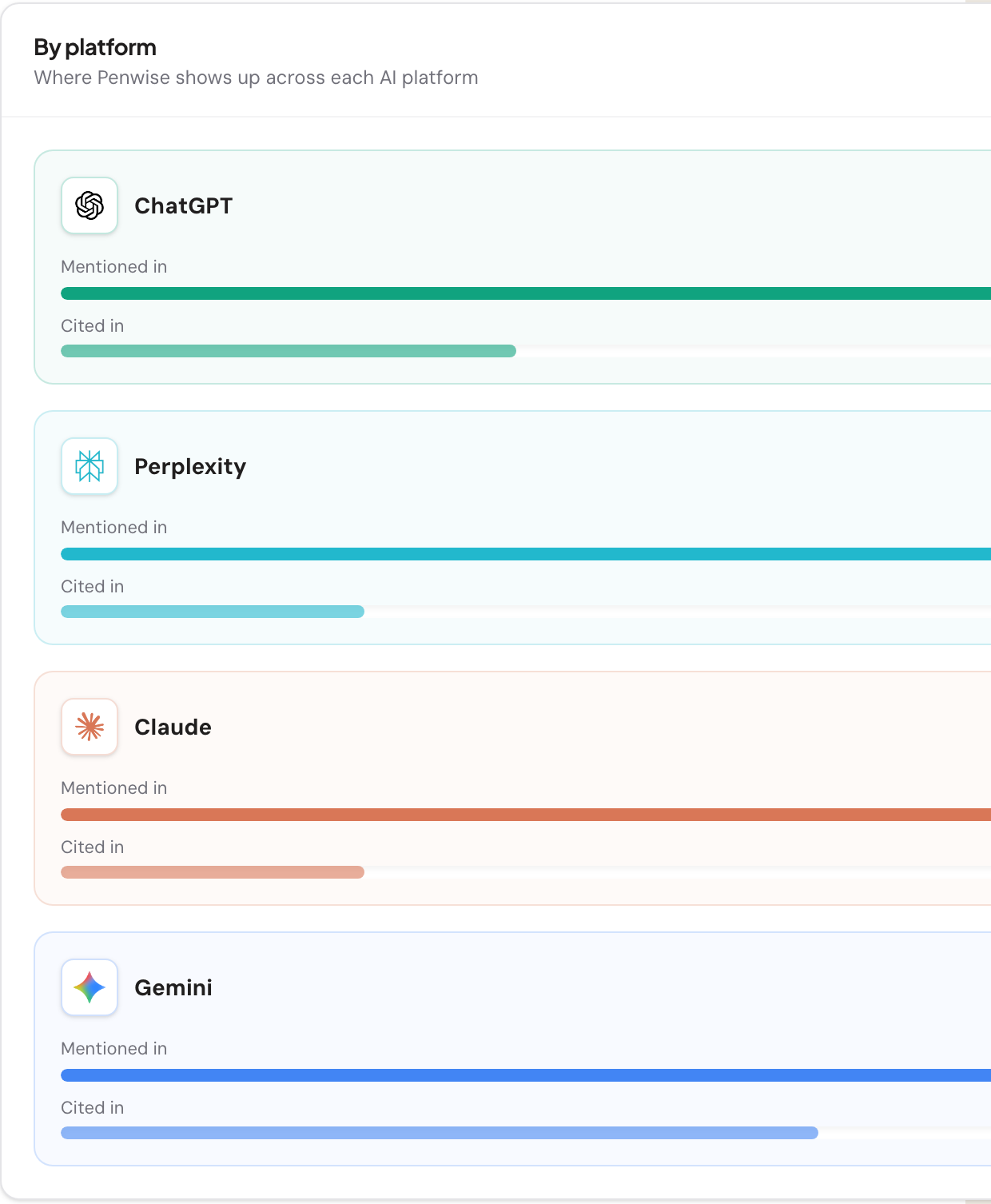
By platform
One LLM can carry a wrong fact the others don't. Knowing which one narrows what you have to go and fix.
How it works, end to end.
Step one
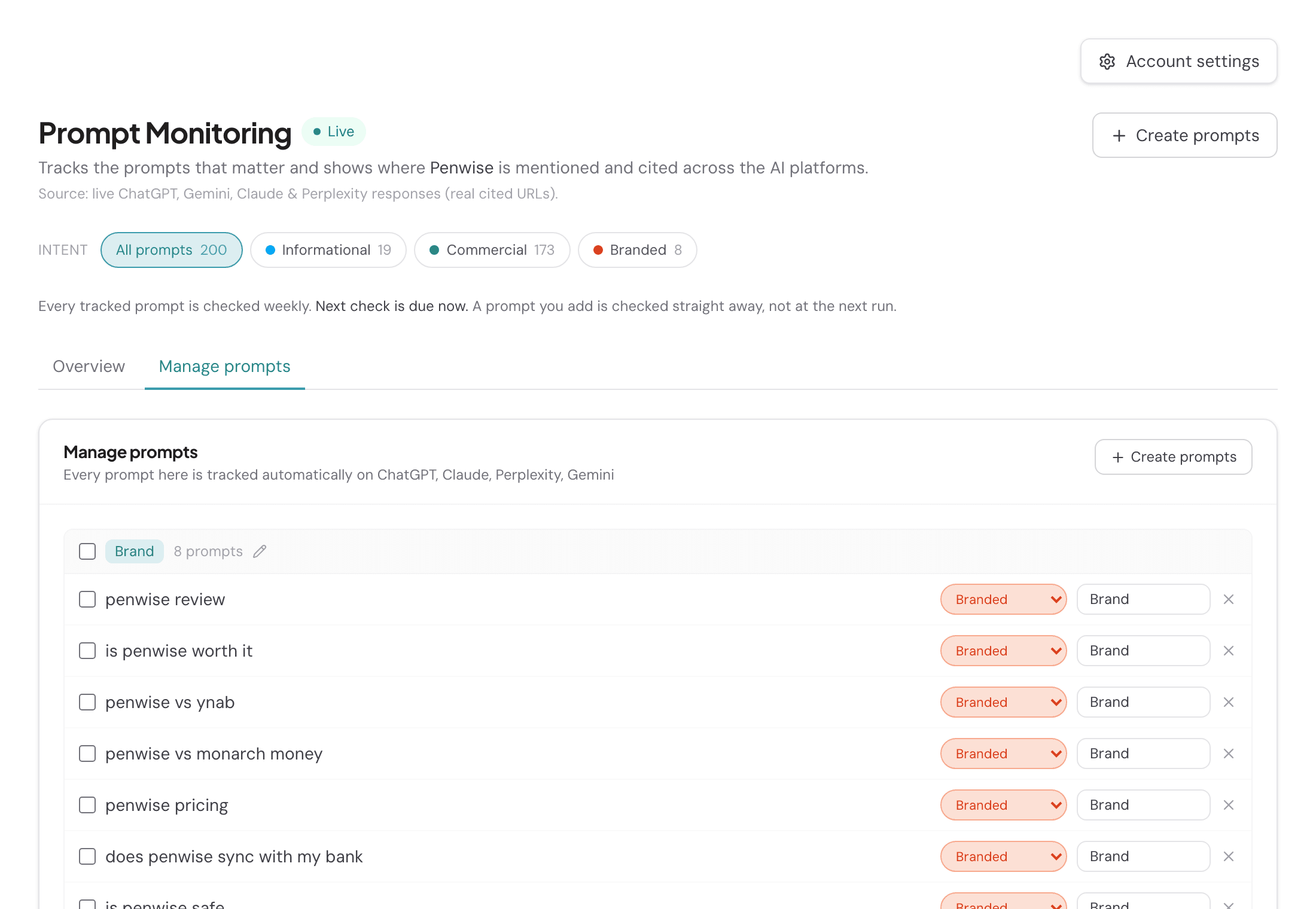
You choose the questions people ask about you.
“What is X”, “how much does X cost”, “is X any good”, “who owns X”. Tag them branded and they get their own view — one built around the text of the answer rather than a count of appearances.
- Whole prompts, not keywords
- Tagged branded, so they aren't scored like recommendation prompts
- Checked across ChatGPT, Claude, Gemini and Perplexity
Step two
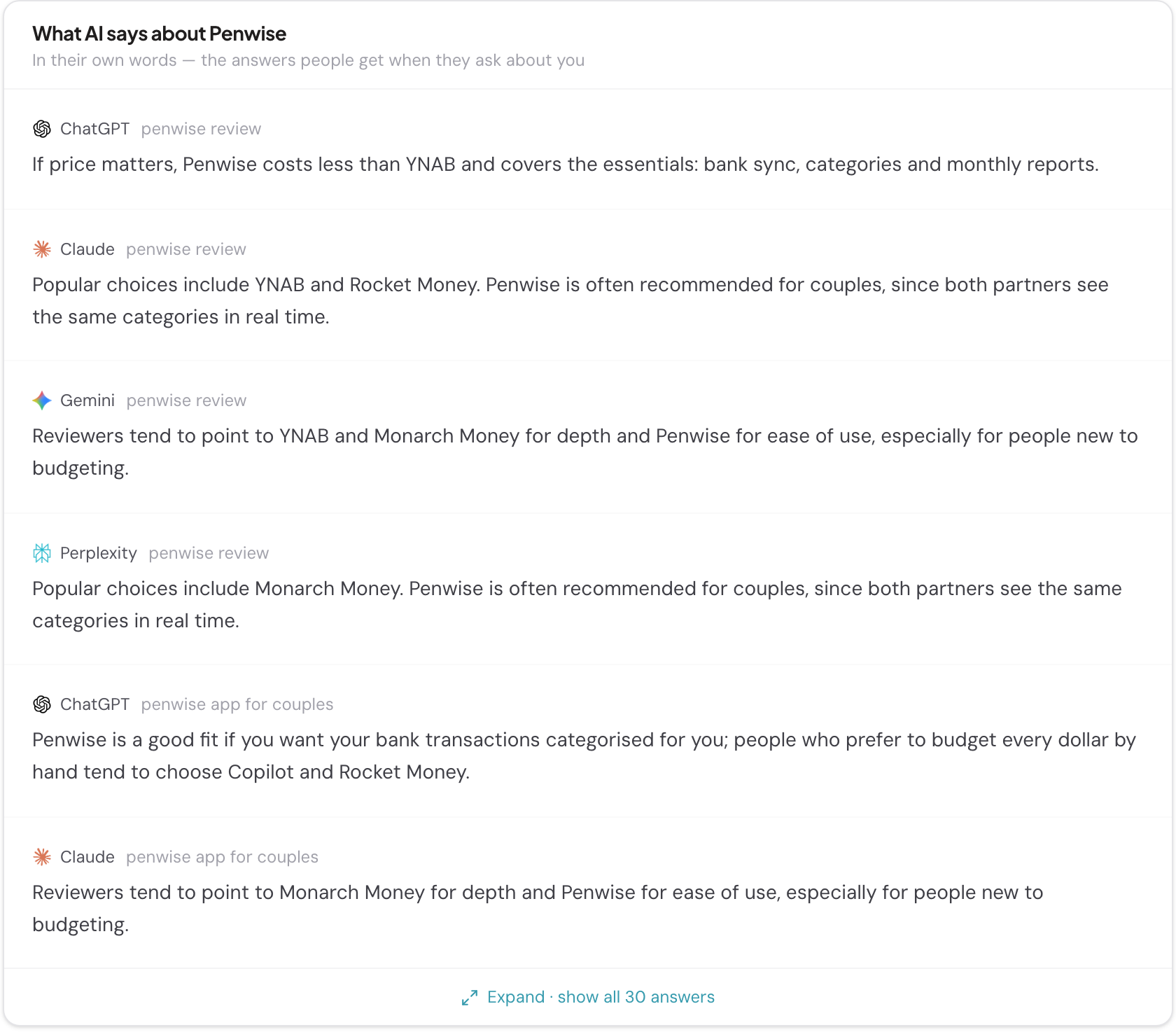
We keep the answer, not a summary of it.
Every response is stored in full and kept run to run, so when a description changes you can see what it used to say. A sentiment score would compress exactly the detail you need to act.
- Full answer text, kept per run
- Changes visible against the previous crawl
- Read it yourself rather than trusting a number about it
Step three
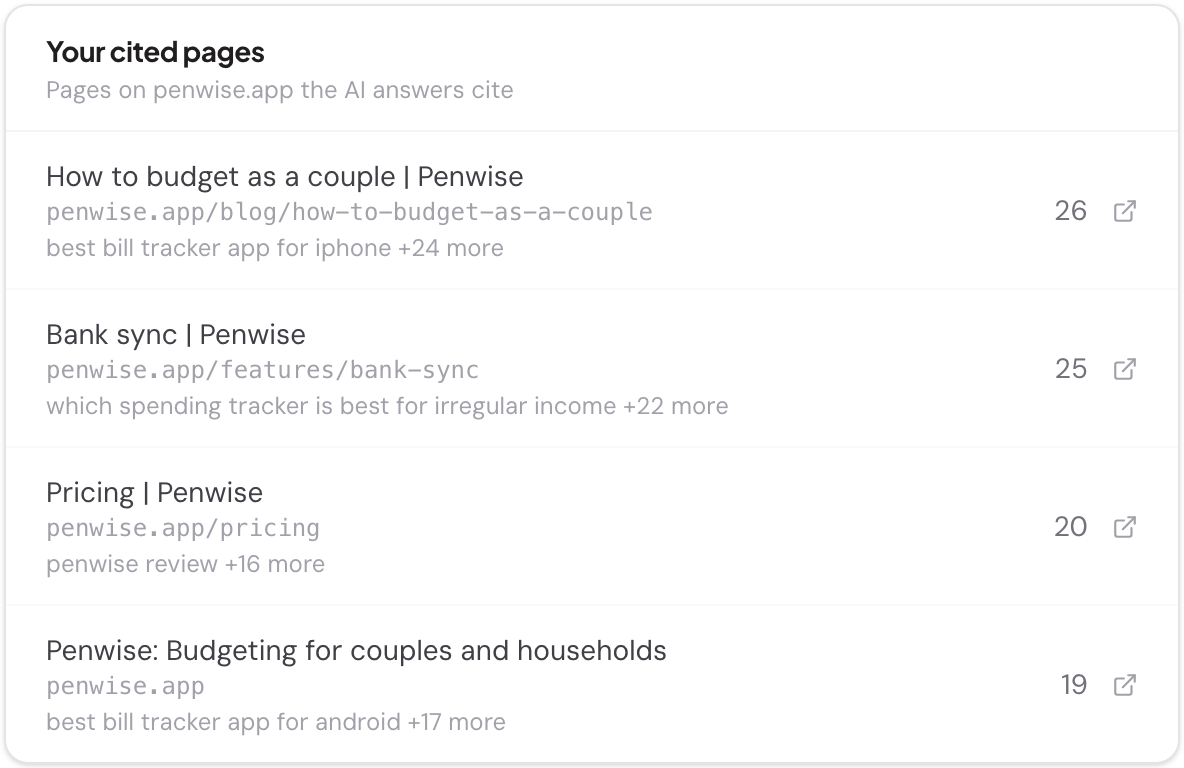
You trace it back to the pages.
Each answer keeps the sources it was built from. A wrong fact is almost always a page saying the wrong thing — often your own, sometimes a directory listing nobody has updated in two years.
- Sources captured alongside every answer
- Your own pages separated from third-party ones
- The outreach list falls out of it
Frequently asked questions
Not directly — nobody can edit an LLM's answer. What this does is find the wrong statements and show you the pages they were drawn from, which is the part you can actually change. Usually it's stale pricing on your own site or an old directory entry, and both are fixable.
Because a score compresses away the thing you need. “72/100” doesn't tell you the LLM is quoting a price you retired last year. We keep the answer text and let you read it — the score would be easier to display and worse to act on.
Because the question already contains your name, so the LLM is going to talk about you. That's why this lens doesn't lead with presence — on branded prompts, presence is a given and accuracy is the whole story.
Every run is kept, so a description that shifts between crawls is visible as a change rather than something you'd have to remember. That's also how you tell whether a fix worked.
No. Nobody has access to other people's conversations, and anyone claiming otherwise is worth a hard look. We ask the questions you choose, ourselves, on a schedule — so everything here is an answer to a question you wrote.